
Obsessed with virtue signalling
Have you performed well?

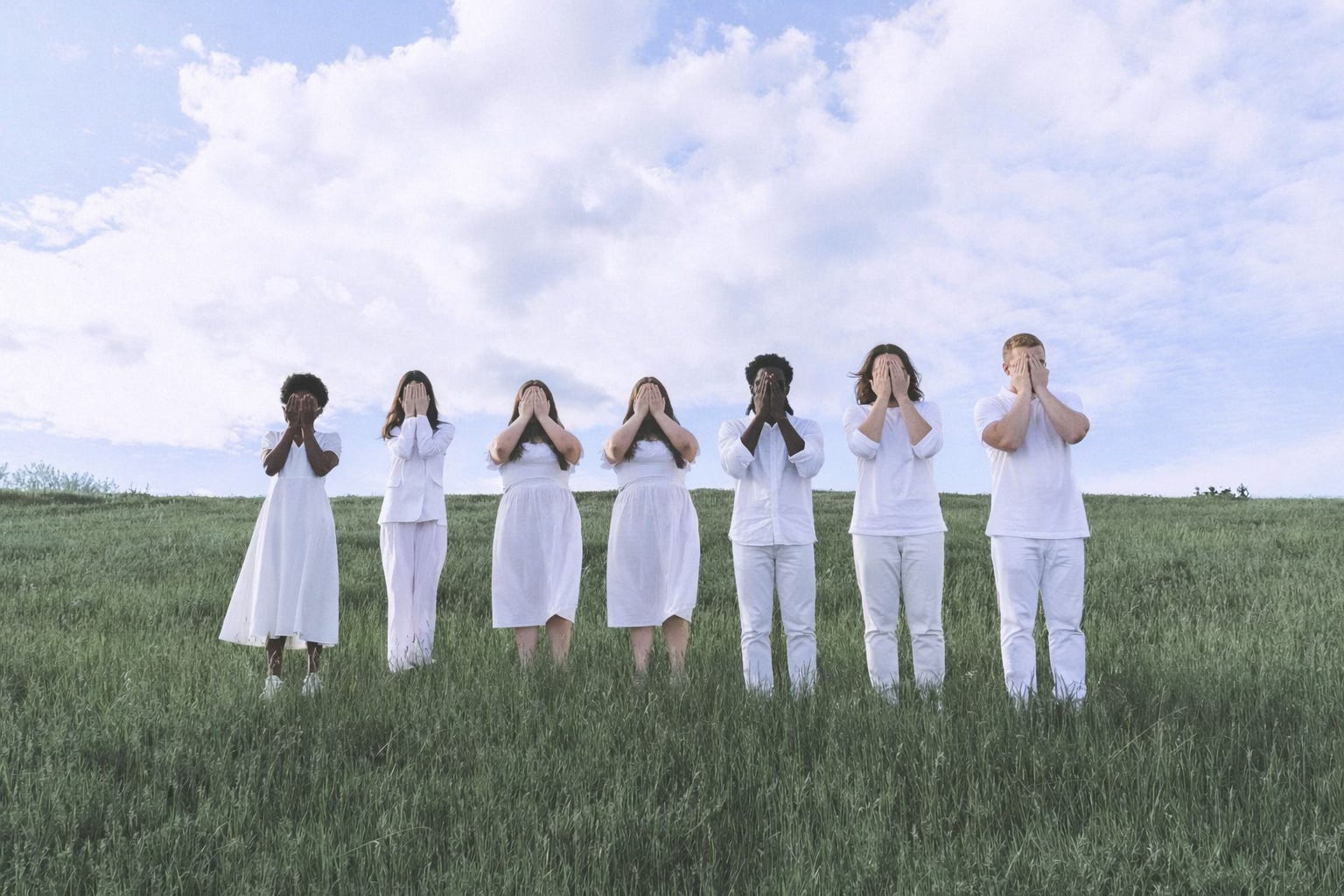
There is a civic sacrament:
The gesture.
Not the act.
Not the risk.
Not the sacrifice.
The gesture.
A raised fist that never touches power.
A slogan that never becomes policy.
A march that ends exactly where the police politely told you it would end, at exactly the time your calendar reminder said “wrap it up, bruh.”
A carefully curated morality play, performed on the weekend, edited on the tram ride home, posted before dinner.
And then—
the great absolution:
I did something.
No, you fucking didn’t.
You performed the idea of doing something, which for some stupid reason is often treated as morally equivalent—sometimes even morally superior—because it looks clean. It looks righteous. It looks like you. Who are you?
Support my work with a tip. Some coffee money or a pack of cigarettes, perhaps.
I. Mirror, mirror in the walls
Liberalism (the vibe) has become a mirror cult.
It doesn’t ask: What changes the structure?
It asks: What does this say about me?
Politics becomes personality.
Ethics becomes aesthetics.
You do not overthrow systems—you curate a self that would never, ever, be mistaken for the bad people.
And because the self is the only battlefield liberalism reliably recognizes, it turns everything into a morality audition:
Are you pure enough?
Are you seen as pure enough?
Did you use the correct words?
Did you signal the correct disgust at the correct villains?
Exhausting, socially addictive, politically sterile.
A society can die from sterility. Not dramatic death—no guillotines, no blood fountains, no eyes gorged out. Just… no births. No future. No capacity to envision a real, new, better world. The recycling of outrage, of symbols, of self, eternal.
II. A performance
Mark Fisher gave a name to the atmosphere we’re breathing: capitalist realism—that widespread sense that current capitalism is not only dominant, but inescapable, the horizon itself.
And inside that atmosphere, something psychological happens. Fisher calls it reflexive impotence: people “know” things have gotten bad (first wrong assumption; things have always been bad), and even more than that, they “know” they can’t do anything about it (second wrong assumption).
There’s the trap door.
When you believe real change is impossible, you don’t move. You can’t. Yet the nervous system needs a release valve. So you shift from transforming the world to performing concern about the world.
You convert politics into theatre because theatre is available; struggle into content because content is rewarded; revolution into “awareness” because awareness is safe.
In capitalist realism, dissent gets domesticated—turned into something you can consume, share, wear, display, and then forget without guilt. A protest becomes a photo opportunity for the conscience.
III. The good people
Here’s where the obsession with symbolism turns malignant: the moral binary.
Liberalism must always be the good side. The only good side.
The other side(s) must always be the ultimate evil: fascists, monsters, irredeemables, or, for the left hand of darkness (a good book), dreamers, idiots, communists, etc.
Now—sometimes, yes, that one other side does flirt with fascism. Sometimes it really is violent, anti-human, cruel. This isn’t a plea for ignorance. It’s a plea for a functioning brain.
Because when “fascist” becomes your default punctuation mark, it stops being analysis and becomes… what? An exorcism? It’s not a diagnosis anymore, just a spell or something. And spells are comforting, sure. Spells give you the feeling of power without any of the danger of power. You get to hate cleanly, be right publicly, build identity out of condemnation. But building identity is not building leverage. And leverage—real leverage—is what would scare capital, not your righteousness.
IV. Peaceful protests
I’m going to say this as gently as I can:
A huge amount of “peaceful protest” culture is bullshit and actually detrimental to the cause they represent.
You ask the state for a route.
You obey the route.
You chant at the sky.
You stop at the appropriate time.
You go home.
You repeat. You make a career of it. Whole entourages travelling the world, waving the same banners from Washington to London to Tokio.
And the outrage gets processed like waste water; a whole system designed to neutralize it.
Not all protests. History is full of protests that mattered—because they were connected to disruption, organization, strikes, boycotts, solidarity networks, and actual costs imposed on power.
But the modern liberal protest, the brand-safe one, the one sponsored by vibes, is often more a protest against your own guilt than anything else. Therapy with posters. No strategy. No escalation. No risk. No institutional memory. No building. Just the dopamine drip of being seen as good, very good, so, so good.
V. Charity, forever
Then there’s international aid: the great moral export product.
Here too, liberalism prefers the symbol to the structure.
Charity feels good because it is immediate and personal. It flatters the giver. It produces a clean narrative: I helped. It creates a heroic self-image without requiring any conflict with what created the need in the first place.
Meanwhile, decades pass. Enormous sums move. Unimaginable sums. A few lives are improved, a few crises superficially patched, some disasters somewhat softened. And yet whole regions remain trapped in cycles of debt, corrupt local elites, external extraction, climate violence, proxy wars, sheer ignorance, and the brutal math of a world economy. Africa is as fucked up today, billions upon billions of dollar later, as it was 50 years ago
The uncomfortable suspicion: the aid industry functions as a moral sedative for the virtuous world.
It’s not that helping is bad, per se. It’s that helping has become a substitute for changing the conditions that make help necessary. What should be accused is instead managed.
VI. You-problem
Actual politics and policy do not matter to you. When you have decided to hate, you hate no matter what. That person is on the other team, Goddammit! They are evil! Therefore all they do cannot be considered anything but evil. The actual working women and men cannot feed their families on your virtue. Wave a flag, serve pizza employees pizza, add a pronoun pin, declare solidarity to whatever and do whatever. Oppose the fad of the week, oppose everything that could actually be used to improve lives, oppose technology, oppose actual progress, oppose others opposing. Just have a good conscience and you will be fine.
No one will care, nothing will be improved, but that is not what concerns you.
Thanks for reading,
Antonio Melonio
Before you disappear into the ether,
support my work, perhaps?
If you still value independent, free, critical, and personal thoughts, please support writers such as me financially. It’s the only way to make sure the world doesn’t drown in curated bullshit.
And yes, I know. I know. I KNOW. Everyone hates subscriptions. I understand. That’s why you can support my work with a one-time tip (it’s like two clicks). No commitments there.
Even better (for me): you can, of course, also support me with a monthly subscription on Patreon or here on Substack:
This year I have realised a lot of my activism probably isn't as affective as I thought it was. This was, in part, because the systems taught me how to protest, which I now realise was being taught how to be ineffective so the system can continue. I don't think of myself as performative (primarily because most people will never know the energy I put into what I do, nor see me do anything), but now I am struggling to learn how I can use my limited energy to be actually affective, as opposed to simply going through the sanctioned movements (turns out the system really doesn't want us to know how we can change and break it).
Brutal and true.